Life On the Fire Line
Jul. 22, 2025 | Community Features
Jul. 22, 2025 | Community Features
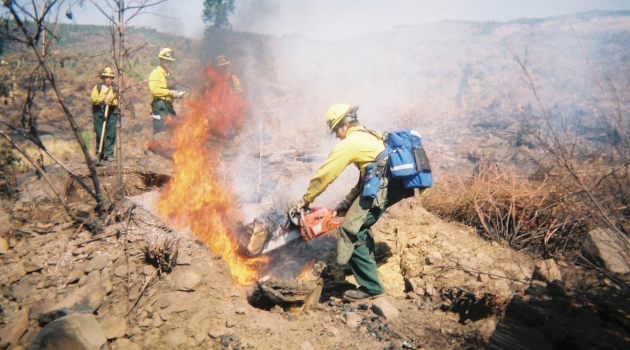
The towering flames, the ash lingering in the air and the grueling 16-hour shifts on the fire line left a lasting impression on Delaware Electric Cooperative Board Member Mike Brown, who fought his first western wildfire in Idaho in 1989.
After arriving in the remote mountains of the gem state, Brown was given a paper sleeping bag and told to find a cardboard box. Firefighting crews didn’t sleep in tents back then, and the box, he was told, would keep the dew off
his head.
Brown tackled his first fire in scorching 95-degree heat — and shivered in his paper sleeping bag as overnight temperatures fell into the 20s. Still, the incredible challenge of working in dangerous conditions — and knowing his work would save property and lives — led Brown to fight dozens of fires across the country during his remarkable career.
The lessons Brown learned during that first expedition would prove vital as he helped usher in a new era for the Delaware Forest Service. After being named the forest manager at Blackbird State Forest in 1991, Brown worked his way up to deputy state forester and fire supervisor in 1995. In his new role, he immediately began building a modern fire program for Delaware.
Brown established a robust training initiative to ensure foresters were ready to battle the infernos they would eventually face. “It’s hot, dirty work, and there is nothing glamorous about it,” says Brown. “A lot of times, we had to be flown by helicopter into the fires because the areas were so remote. Someone who’s in the best shape in Delaware may struggle with the slopes and altitude out there.”
Fire crews received extensive training on how to dig fire lines to prevent wildfires from spreading and learned how to backburn — a tactic in which crews deliberately start a controlled fire to deprive the main blaze of fuel.
When wildfires broke out in the western U.S. — usually as a result of lightning strikes — Brown and his crews had roughly 12 hours after activation to prepare to leave. They never knew what would be waiting for them on the fire line. “The Derby Fire in Montana stands out in memory,” Brown says. “It had burned 11,000 acres when we arrived and grew to 220,000 acres in two days. The fire ran 7 miles in two hours — 250-foot-tall flames a mile wide, consuming everything in its path. We’d move from ranch to ranch trying to save them before getting out in the nick
of time.” Brown says the job brought many challenges, including being away from family with limited communication for weeks at a time, and witnessing the toll fires took on the communities he and his colleagues were working to save.
“I remember seeing a little girl in the back of a car, tears streaming down her face,” he says. “People were losing their homes, their animals — things they had to leave behind.”
Despite the physically and emotionally draining work, Brown says the job was also deeply rewarding. His Delaware crews earned a reputation nationally for their stamina and hard work, and Brown never lost a crew member. After retiring from firefighting in 2010, he remains grateful for the bonds he forged with his fellow firefighters and is proud of the impact he had on the small, rural communities he helped protect.
“It’s a brotherhood, there’s no question about it,” Brown says. “And to read a letter from a rancher thanking you for saving their home, their farm and their livelihood — it’s a good feeling.”