Project Recover
Aug. 5, 2026 | Community Features
Aug. 5, 2026 | Community Features
On July 10, 1943, 2nd Lt. Jason Goldwater and three fellow crew members took off from Carney Field in Guadalcanal in a B-25 bomber. Two years after the stunning Japanese attack on Pearl Harbor, World War II was raging in the Pacific theater. Goldwater had been deployed as part of the U.S. strategy of capturing strategically important islands where Allied forces could more effectively attack Japanese targets.
As part of the 69th Bombardment Squadron, the crew’s mission was to conduct a low-altitude bombing and strafing mission against Japanese positions in the Solomon Islands. Shortly after takeoff, the plane plunged into the ocean and instantly sank beneath the waves. Only one crew member survived the crash, and Goldwater’s remains were lost for more than seven decades.
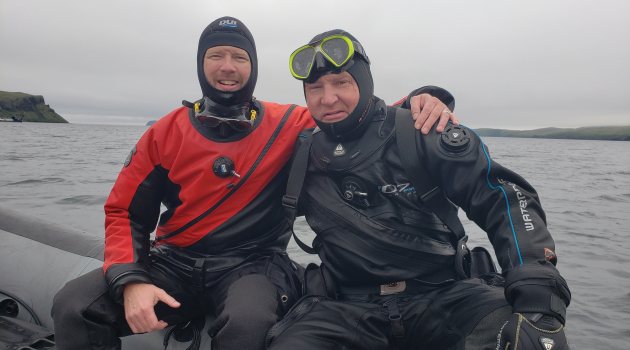
If not for the efforts of Co-op member and University of Delaware professor Dr. Mark Moline, Goldwater’s remains may still be resting at the bottom of the ocean. Dr. Moline is a cofounder of Project Recover, a nonprofit that scours the globe to identify the remains of American service members missing in action and bring them home. Goldwater was one of more than 81,000 Americans classified as missing in action.
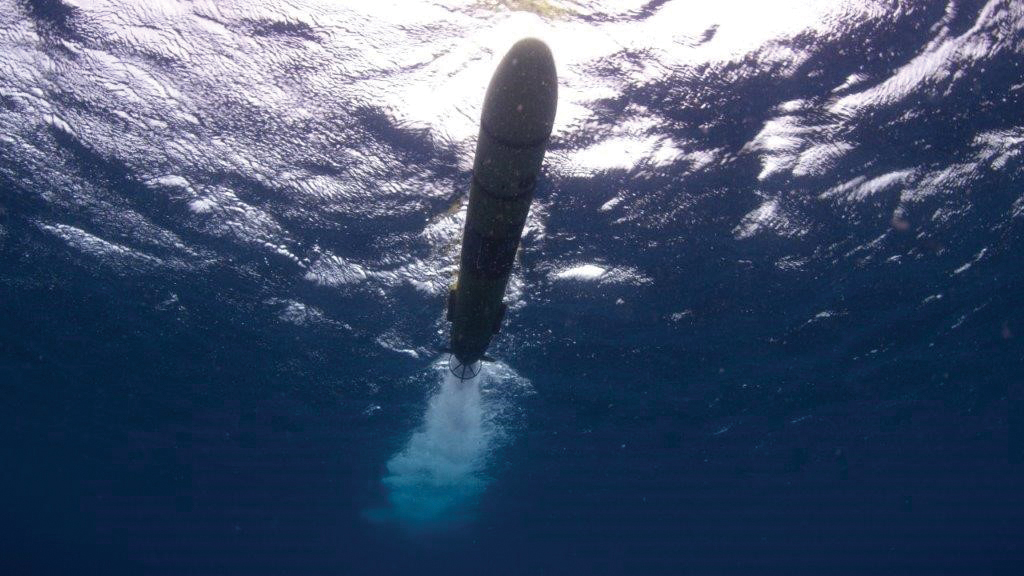
Dr. Moline and a team from Project Recover first identified Goldwater’s B-25 during an investigation in the Solomon Islands in 2017. Using modern sonar, underwater scanning technology, a magnetometer and autonomous underwater vehicles, the group found plane wreckage in the area where Goldwater’s B-25 had crashed. In 2022, using Project Recover data from the mission, archaeologists with the Defense POW/MIA Accounting Agency began excavating the crash site and found possible human remains.
“You can look at high-resolution images of the entire wreck in detail. You can determine where the crew’s seats were, where the cockpit is and where the gunner position is. You can actually see the wreckage, a sort of anatomy of a crash and figure things out. We then come back and provide that information to the government,” Dr. Moline says.
Excavation ended in 2024, and over the following year, laboratory DNA analysis concluded that the remains found at the bottom of the Pacific belonged to Goldwater. After 83 years listed as missing in action, the American hero would finally receive a proper burial.
For cases such as Goldwater’s, Dr. Moline and his team’s research and recovery efforts take years. They build the case for each mission based on how many remains could be recovered at a crash site. Project Recover investigates military plane crashes — both on land and at sea — and traveling to the sites can be arduous. Many of the crash locations are in remote areas of the world.
Once at a site, scanning the ocean floor in search of plane wreckage can be painstaking. Dr. Moline says trips can last a month or longer — hard work that is well worth the effort when discoveries are made.
“Some of those missing in action still have sisters and brothers who are alive, and it means everything to them to have closure. For decades, they’ve been wondering what happened,” Dr. Moline says.
During recovery operations, remains and site artifacts are carefully vacuumed from the ocean floor using specialized equipment. When remains are brought to the surface, Project Recover and its partner organizations treat the deceased with dignity and respect. An American flag is flown above the location where the remains were discovered — a flag that is eventually presented to family members of the fallen hero.
The work of Dr. Moline and the Project Recover team is so important that the University of Delaware launched a study-abroad internship program built around the nonprofit’s mission. Since 2024, students have taken part in missions to Micronesia and Palau in Oceania, working alongside researchers searching for missing Americans. Since Project Recover’s founding, the group has worked in 27 countries, located aircraft associated with approximately 200 missing service members and contributed to the identification and return of 23 Americans.
For Dr. Moline, his fellow researchers and students, the interment of a fallen hero serves as a reminder of why their work matters and marks an often emotional end to a yearslong mission. Goldwater was interred at Arlington National Cemetery on May 29 in a ceremony attended by Dr. Moline, students, Project Recover volunteers and Goldwater's family. Eighty-three years after giving his life for his country, Lt. Goldwater was finally laid to rest with full military honors. In tribute to his sacrifice, the airspace over Washington, D.C., was closed for 10 minutes to allow a B-52 bomber to fly over the hallowed cemetery.
“These families have had no answers for 80-plus years in some cases, and they didn’t even know people were looking for their loved ones. There’s an emptiness that we can help eliminate. One of the people who delivered a eulogy at Arlington in May was a grandnephew who was named after Jason [Goldwater]. People don’t forget the legacy of that sacrifice, and that’s what our work is all about," Dr. Moline says.
To learn more about the team's work to recover MIAs or to donate to the group’s efforts, visit projectrecover.org.
Read more stories from this year's edition of Delaware Living magazine here.