Transforming Lives — DEC Electrifies the Navajo Nation
Aug. 6, 2026 | Community Features
Aug. 6, 2026 | Community Features
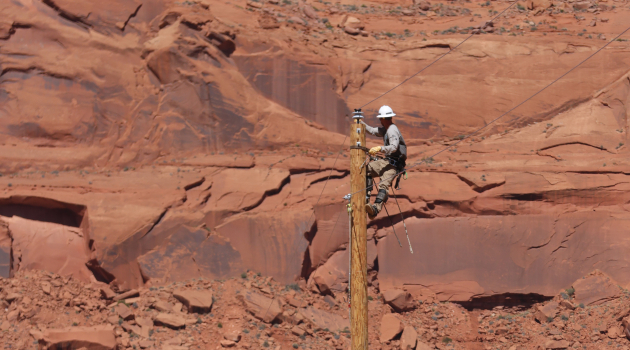
Ninety years ago, Delaware Electric Cooperative was founded on the idea that everyone deserves access to affordable, reliable electricity. When investor-owned utilities didn't see the value in electrifying rural communities, local farmers stepped up and pooled their resources to bring the electricity they needed to their homes and businesses. Thanks to their efforts, most DEC members have never known a life without electricity. We take it for granted that when we need light, we simply flip a switch and it appears. When we want a drink of water, we turn on the faucet and fill our glass. Yet for more than 9,000 families living in the Navajo Nation today, this is not the reality.
Across the 27,000-square-mile reservation that spans New Mexico, Arizona and Utah, many families have lived without electricity for generations. In June, Delaware Electric Cooperative joined 51 utilities from across the country in an effort to change that — an effort called Light Up Navajo (LUN).
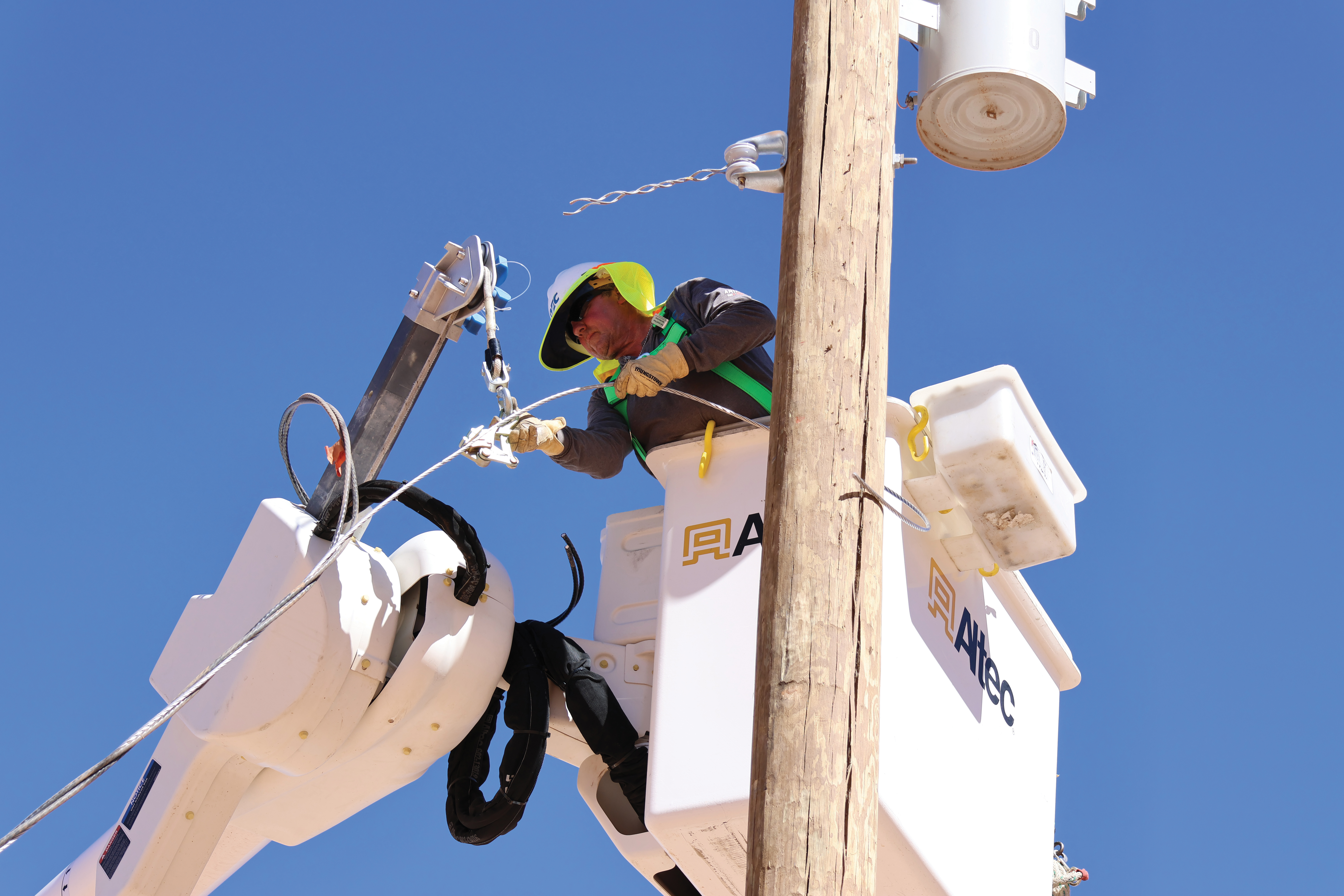
The average cost to provide power to a home in the Navajo Nation is $40,000, a price that includes the initial construction of electrical infrastructure and setting the meter. In an area where 35% of people live below the national poverty line and the average household income is roughly $36,000 per year, this is an overwhelming expense. That’s why the Navajo Tribal Utility Authority (NTUA) — the not-for-profit utility responsible for providing electric service to those living on the Navajo reservation — partnered with the American Public Power Association (APPA) to create Light Up Navajo. Started in 2019, LUN is a mutual aid program that seeks the help of lineworkers and electricians from all over the nation to help bring the benefits of electricity to the reservation — offsetting the cost of power for Navajo families.
DEC’s Vice President of Operations Jesse Spampinato first learned of LUN at a conference in 2025. NTUA’s general manager Walter “Wally” Haase was a featured presenter, and Spampinato was intrigued by how the program’s mission closely aligned with the Co-op’s own values.
“He was asking for help from cooperatives, and being that it’s a cooperative principle — for cooperatives to help other cooperatives — it’s in the nature of our industry to help,” Spampinato says.
On June 20, DEC lineworkers Joshua Benedict, Harrison Burris, Greg Williamson, Zane Lawson and operations training supervisor Philip Collison traveled to Arizona to join more than 250 of their peers from 24 states participating in LUN VII.
“We were going out there to turn the lights on for somebody,” Collison says. “It’s the same as all the storm calls we’ve ever been on. You go to turn the lights back on.”
“In this case, to turn them on for the first time,” Williamson adds.
Unlike the majority of work Co-op crews perform on a daily basis, the work completed on LUN missions involves more than simply restoring power — it requires laying the foundation of electrical infrastructure that will support Navajo families for generations to come.
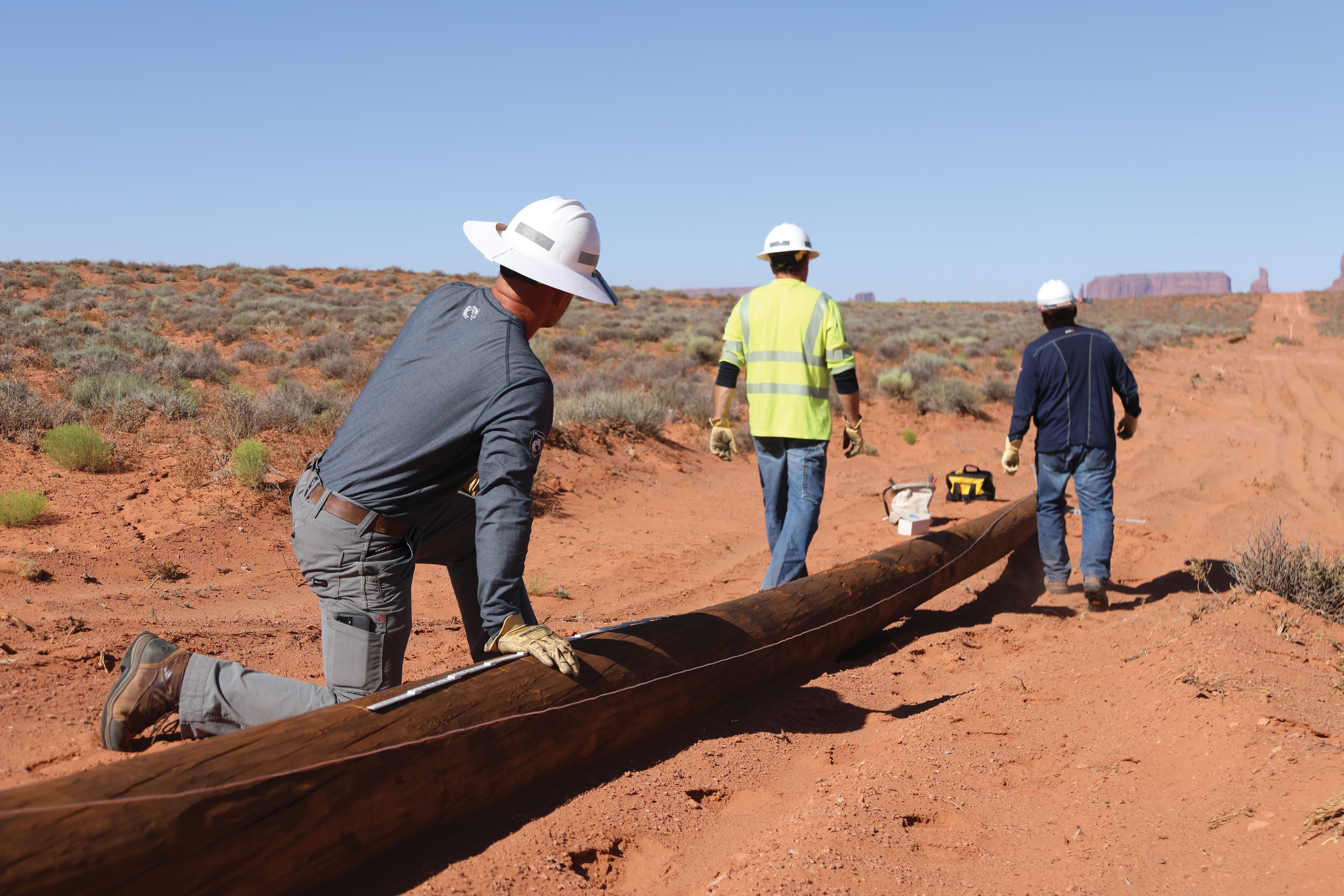
“This is like the final frontier for linework in this country,” Burris says. “It’s full-blown bringing power to people who have never had it.”The team was assigned to NTUA’s Kayenta district, which covers areas of Arizona and Utah. For six days, the crew was charged with framing and setting poles, as well as stringing wire across terrain that varied from sand to rock. The crew found the landscape and the climate to be the most challenging aspect of their work.
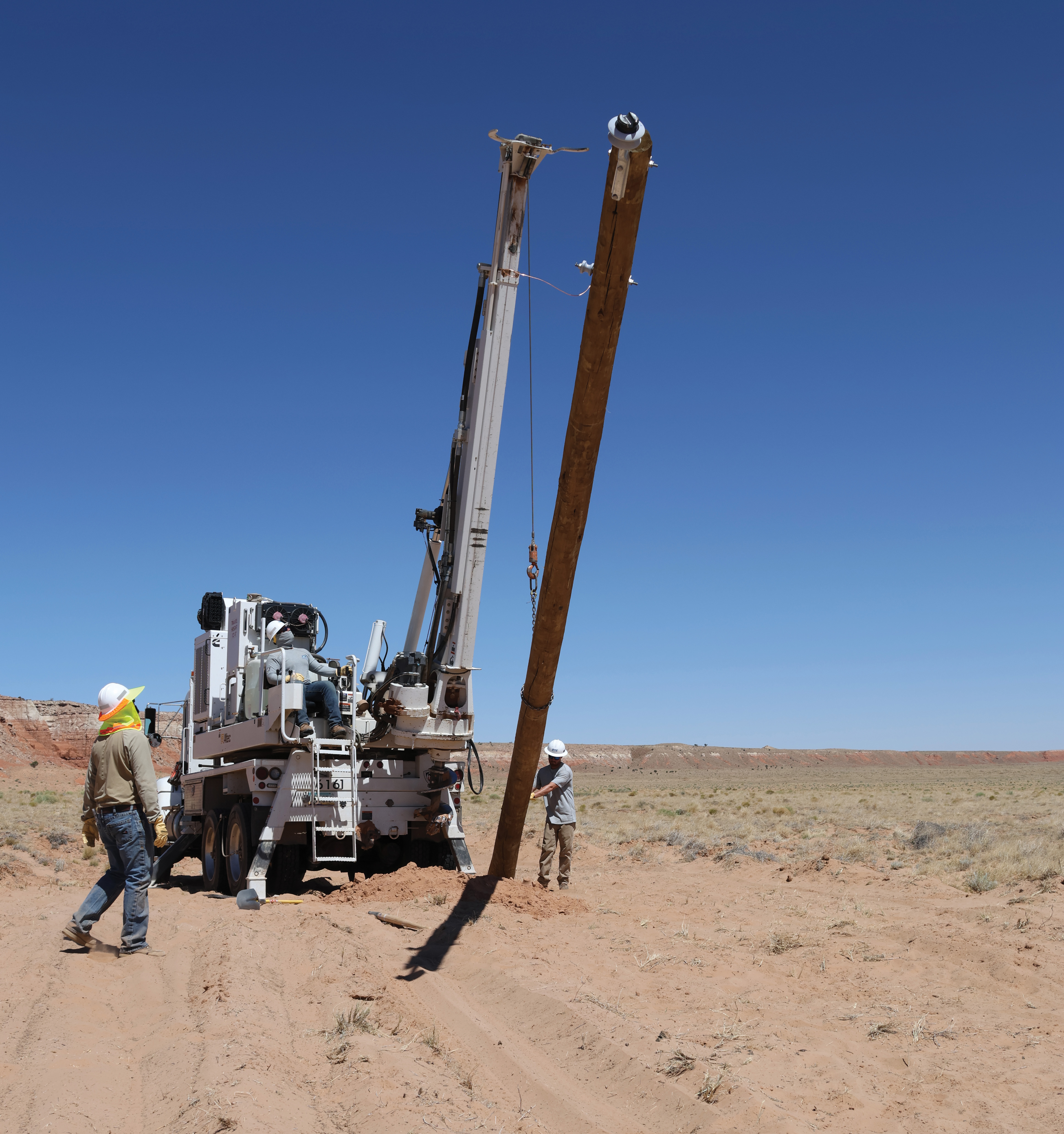
“Imagine putting boots on and walking the beach for 12 hours a day,” Lawson says.
“Up hill, in the dunes, in 100-degree heat,” Burris said. In some instances, the team reached elevations of 8,000 feet, with wind gusts so hard that they struggled to hear or see each other through the blowing sand.
Co-op lineworkers say all the obstacles were worth it to see the excitement on the faces of residents turning on lights in their homes for the first time. In total, the DEC team electrified roughly five homes during their week in the Kayenta district.
Members of the Navajo community who have been connected to the grid say they're incredibly grateful for the hard work and generosity of visiting line crews. “The words ‘thank you’ don't do any justice. All my life, we have had no power whatsoever,” says lifelong resident Michael Valentine. “Now, since we have the main power, I am enjoying it. In a nutshell, it's been a life-changing experience for me and my family as well.”

Empowering the people the Co-op serves to improve their quality of life is a cornerstone of DEC’s commitment to its members. Co-op CEO Rob Book says being able to extend that commitment beyond DEC’s own backyard is a reward in itself.
“Just as our Co-op electrified rural Delaware 90 years ago, I’m proud of our team for bringing the life-changing benefits of electricity to those in need,” Book says. “Lineworkers are carrying on our legacy of electrification decades after we energized the first Delaware farm.”
Read more stories from this year's edition of Delaware Living magazine here.